🌊 The tide turns
Sargassum hits record highs, Bolivia opens its doors, and Suyana grows into its next chapter. A month of signals turning into products.
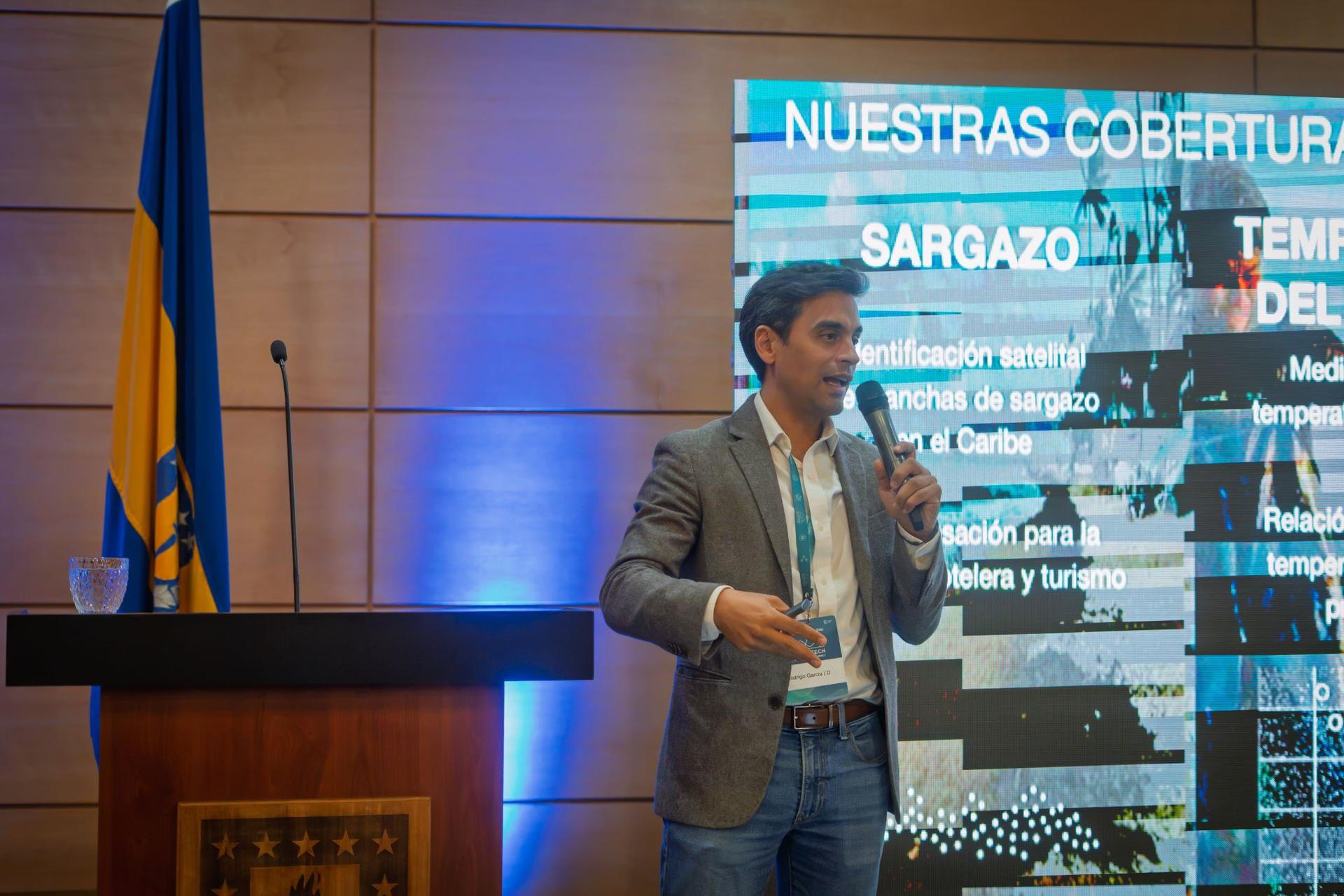
Our CEO Rodrigo García at the ClimateTech Innovation Summit in Chile.
"The sea, once it casts its spell, holds one in its net of wonder forever."
— Jacques Cousteau
🌊 The Sargassum Window
By Carolina Billet and Daniela Risaro, PhD
The sea announced itself early this year. In January, NASA satellites picked up more sargassum in the open Atlantic than any January on record. By April it had spread across the entire Caribbean, nearing a full-season record set only last July. Summer is still ahead.
The brown algae that piles up on beaches empties hotels, fouls fishing grounds, and has even closed schools. For years it has been treated as something to clean up after, not something to insure against. That no longer holds, and Suyana is building the coverage to prove it.
👉 Read the full article by Carolina Billet and Daniela Risaro in the latest edition of our Climate Newsletter
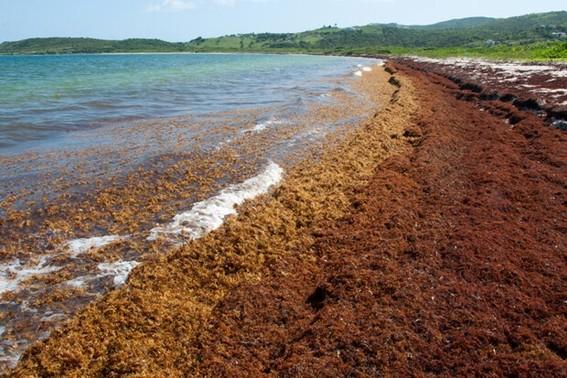
A beach in Saint Martin in the Caribbean covered in Sargassum, November 19, 2011. Photo by Mark Yokoyama via Flickr. Used under CC BY-NC-ND 2.0 license.
🎉 Suyana Receives Regulatory Approval in Bolivia 🇧🇴
After a process more than a year in the making, Suyana has received approval from APS, Bolivia's insurance regulator, for its parametric drought product. The approval covers the full structure of the cover, how the parametric trigger works, how payouts are calculated, and when they are released. It is the official stamp that clears Suyana to sell.
BISA Seguros, Suyana's insurance partner in Bolivia.
What changes now is reach. With approval in hand, Suyana can sell directly through banks and to large agricultural producers, the channels where embedded distribution does its work. The path no longer runs through the gray areas that companies use to operate while they wait. It runs through the front door.
The approval does not make the product sound. The science, the pricing, and the structure were sound before any regulator signed off. What approval changes is perception. A year of careful work can sit quietly until a single document makes it visible, and then the conversations shift. Clients who watched from a distance lean in. The work was always real. Now it reads that way to everyone.
For a company built on making climate protection affordable in markets that traditional insurance has skipped, Bolivia is the proof that the model clears the bar where it counts: a real product, approved by a real regulator, ready to sell.
🔦 Team Spotlight: Max Glanville
Max Glanville joined Suyana this summer to lead one of the company's most consequential pieces of work: the path toward becoming a Managing General Agent (MGA). Max is a candidate in the Master in Public Administration in International Development at the Harvard Kennedy School, with prior experience as an Associate in the Chief Economist's Office at the OECD, and as an analyst at the Reserve Bank of Australia and Australian Treasury.
For readers outside the insurance world, the shift is worth explaining. Today Suyana designs the risk models and prices the coverage, then passes that work to partners who carry the risk. As an MGA, Suyana would take on more of the chain itself, with the authority to underwrite and bind coverage directly. It is a meaningful step up in responsibility, and in what the company earns for the work it already does.
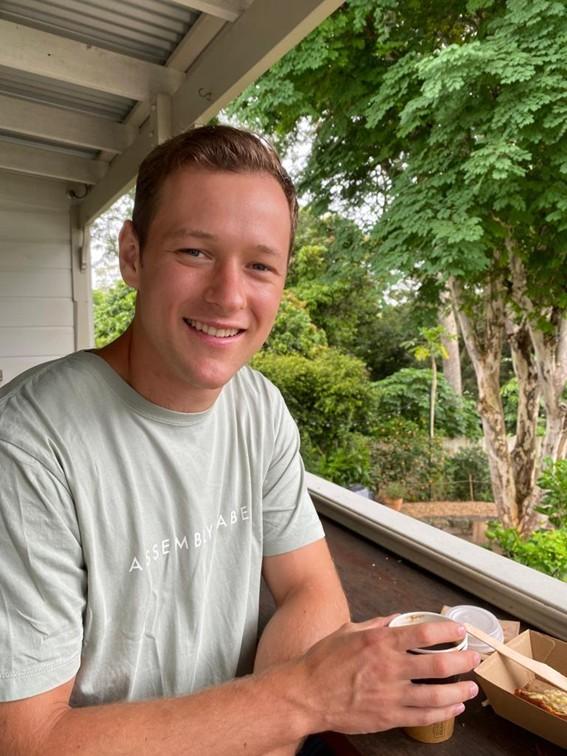
Max Glanville, leading Suyana's transition to a Managing General Agent (MGA).
Max is building the case for that transition from both sides. One is the external argument Suyana will bring to reinsurance partners. By partnering with Suyana, carriers can access markets they cannot access efficiently: Suyana's embedded distribution relationships, climate expertise, and parametric underwriting specialty remove the operational barriers keeping carriers on the sidelines. Beyond market access, Suyana's climate models provide carriers with a deeper understanding of the correlations between physical climate risks across countries and perils, enabling meaningful book diversification within a singular regional allocation.
The other is the internal analysis of what the model requires, what it costs, and what it returns. Suyana is building out its index development pipeline and proprietary collection of climate models, and expanding its actuarial and distributional talent to build the credible underwriting authority that carriers look for. As an MGA, Suyana's revenue streams would increase: it would earn a commission override on gross written premiums and a profit commission for outperforming target loss ratios. Suyana is preparing the full MGA application dossier for submission to Lloyd's Managing Agents and reinsurance capacity providers.
🗺️ Where We've Been, Where We're Going
🇨🇱 Santiago, Chile. Rodrigo García spent time in Santiago this month opening conversations with potential partners in the Chilean market. Chile sits within Suyana's expanding footprint across the region, and the visit laid groundwork for commercial relationships as the company brings its parametric products to new markets.
🗽 New York Tech Week. Suyana joined New York Tech Week, where the conversation around AI in insurance has grown sharper. A recurring theme stood out: the value in applying AI to insurance lies less in the models themselves, which are quickly becoming commodities, and more in the systems built around them, the work of reaching clients, structuring risk, and moving capacity. It maps closely to how Suyana sees its own edge, with technology automating the internal work and people doing the parts that depend on trust.
🌾 Coming up: AAPRESID, Rosario. In the first week of August, Suyana will be at the AAPRESID Congress in Rosario, Argentina, one of the most important gatherings in South American agriculture. The team will be on the ground talking with producers about parametric coverage and how it protects against the climate risks that hit farms hardest. If you'll be there, we'd like to meet. Reply to this email and we'll find a time.
Contact us if you have questions or feedback.