The Four Arbitrages in Climate Insurance
Four gaps that kept climate insurance out of emerging markets are closing at once, and together they turn protection into a viable business.
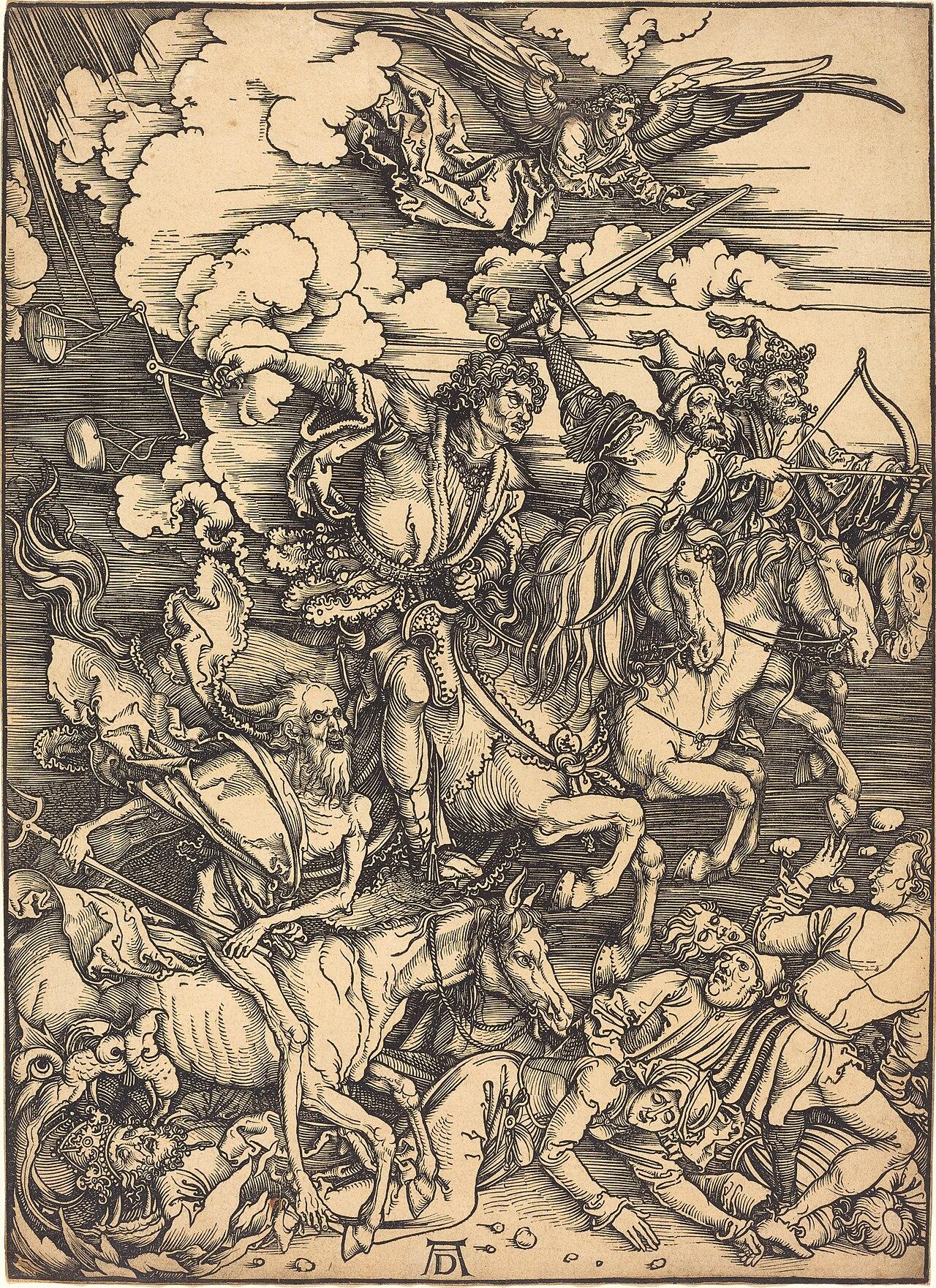
Albrecht Dürer, The Four Horsemen, c. 1496–1498, woodcut. Courtesy National Gallery of Art, Washington.
An arbitrage is a gap between what something costs in one place and what it is worth in another. Close the gap and you have a business opportunity. Markets are supposed to close these gaps fast. When one stays open for decades, something structural is usually in the way.
Climate insurance in emerging markets is one of those gaps. According to AON, the large majority of climate-related losses in developing economies are uninsured. A rice grower in Colombia or a soy farmer in Argentina carries almost the full cost of a drought on their own balance sheet. Meanwhile, global reinsurance capital is looking for risk it can price and diversify. Why is this gap still open? On one hand, data and technology. Traditional crop insurance needs adjusters to visit each field after a loss, which makes small policies too expensive to service. On the other hand, the need for risk diversification by the reinsurers and a reliable way to price complex risks. Suyana is the platform to price and monitor complex risks, so that reinsurers can reliably diversify their portfolio by betting on underserved markets.
In this fashion, Suyana is closing four arbitrages at the same time, so that climate insurance in these markets works as a business.
1. Capital: insurance as a carry trade
In currency markets, a carry trade borrows where rates are low and invests where they are high, keeping the difference. Climate insurance has a similar shape. Reinsurance capital is abundant in mature markets, where competition has compressed returns. In Latin America, large pools of agricultural and climate risk remain unpriced and uninsured. Moving capital toward that risk, for a fee, is the first arbitrage. It only works if the risk is priced correctly.
2. Technology: the cost of seeing fell
Ten years ago, knowing what happened in a specific field on a specific day meant sending people to the ground. Today, satellites revisit the same location every few days or even every day. Decades of climate reanalysis data are free to use. Machine learning can turn coarse global data into local estimates. Suyana's geoprocessing platform uses these inputs to improve the resolution of hazard and exposure data by up to 400 times. Higher resolution means the index tracks what happens at the insured parcel, not a regional average, with high precision and reliability.
3. Distribution: old channels, new products
Insurance is sold, not bought. Very few farmers wake up wanting a policy, and selling to one farmer at a time costs more than the premium is worth. The channels that already reach farmers are the banks and input companies that finance their season. When protection is built into the loan, the farmer gets coverage without a separate sale, and the lender protects its own portfolio from a bad year. This is the model that Suyana is building in Latin America.
4. Diversification: the weather doesn't follow the Fed
Rainfall in the Pampas has nothing to do with interest rates in Washington or earnings season in New York. Climate risk in Latin American agriculture is largely uncorrelated with financial markets. It is also uncorrelated with the perils that dominate reinsurance books today, such as US hurricanes and European windstorms. For a reinsurer, risk that moves independently from the rest of the portfolio has value in itself. For the farmer, it means there is capital willing to cover a risk that local markets could never absorb on their own.
What it adds up to
Capital looking for return existed before. So did satellites, and so did banks lending to farmers. What changed is that all four now line up at once. The data is finally good enough to price the risk, and once the risk has a price, the channels and the capital have a reason to meet. When that happens, a drought in Colombia stops being a private catastrophe for one farmer. It becomes a risk someone priced in advance and a carrier agreed to share. The farmer gets paid, and the next season gets planted.
If you work at a bank, an insurer or a reinsurer and want to explore what this looks like in your market, contact us!.