Offerings to Pachamama
What Pachamama taught us about giving back, and building a climate insurance company.

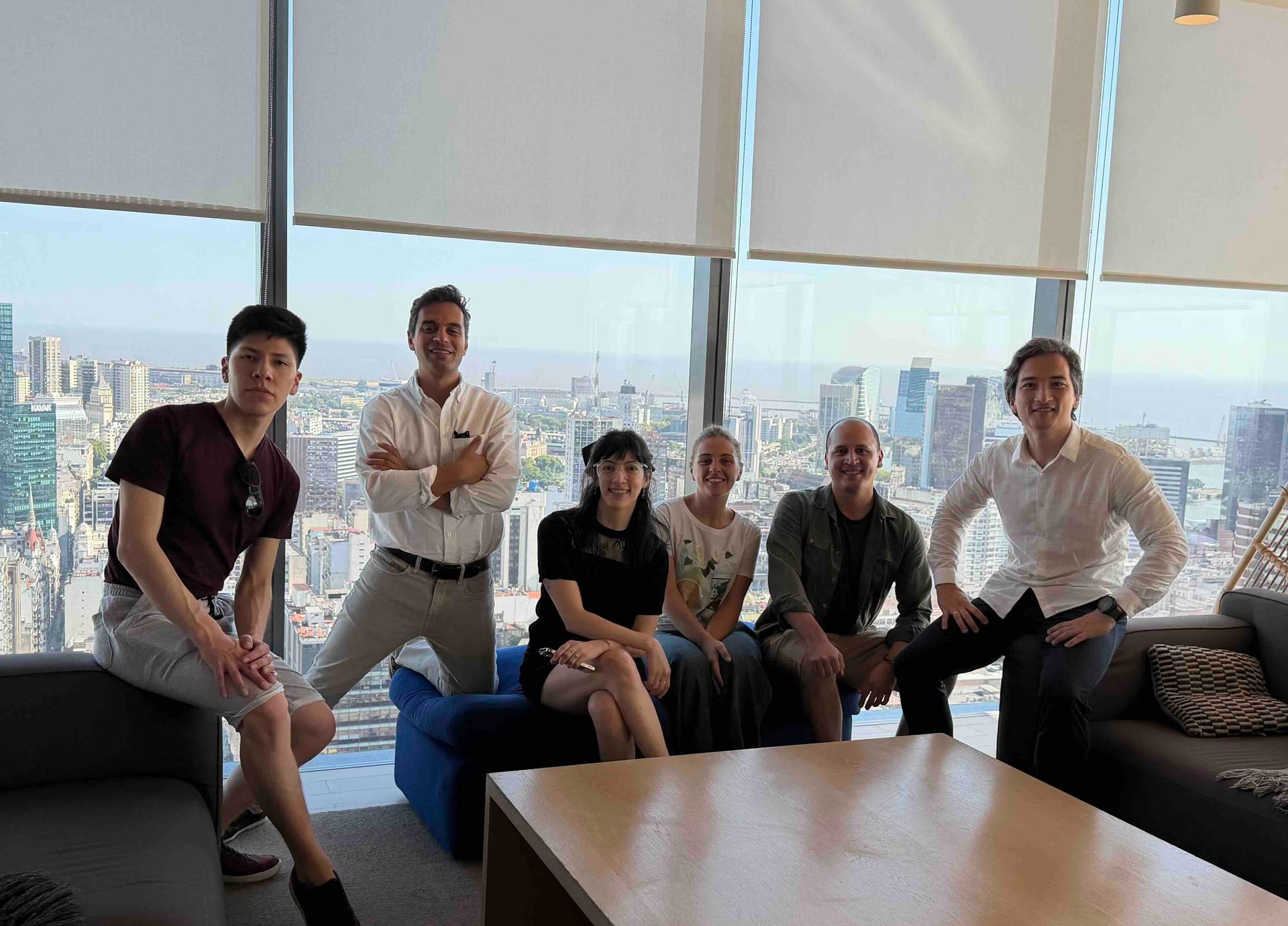
Suyana Company On-Site in Buenos Aires, Argentina
Keep Ithaka always in your mind. Arriving there is what you're destined for. But don't hurry the journey at all. Wise as you will have become, so full of experience, you'll have understood by then what these Ithakas mean.
- Constantine Cavafy (Ithaka)
We were at Lloyd's Lab. Opportunities were expanding, we were learning the language of insurance and reinsurance, forging relationships that would last. But despite the momentum, we hadn't yet converted it into capital or a first client. Something was missing, though we didn't yet understand what.
I must confess something that might seem out of place in a newsletter read by insurance professionals: I have a certain affinity for mysticism. Not blind faith, but that borderland where intuition and symbolism can offer hints in moments of limited clarity. One rainy afternoon in London, I joined a video call with a yatiri in Bolivia, a traditional Andean spiritual guide, someone communities consult for wisdom and direction. From across the screen, she listened quietly before I asked her why we were struggling so much to move forward. Her answer came immediately, almost without pause: "Have you given anything back to Bolivia before you left?" Then, with a hint of reproach she couldn't quite conceal: "Wasn't the idea of Suyana born in the mountains of Bolivia, ten years ago?"
There is an ancient tradition in the Andes that farmers have practiced for centuries: before asking for a good harvest, you offer something to Pachamama, to Mother Earth. Not as a transaction, but as recognition. As anticipatory gratitude. This practice survived centuries of colonization and merged with Catholicism into an extraordinary syncretism, where the figures of Pachamama and the Virgin Mary intertwined in rituals of protection and abundance.
The 18 months that followed were the most demanding in our history. We built a team, developed our first products, and pursued funding with the tenacity of those who know the cause justifies it. Suyana survived thanks to the trust of friends, family, and angel investors, people who bet on a slide deck and the conviction that Fernando and I brought to every conversation. Ahmed and Daniela were our first hires, together we began developing solutions for drought and storm surge. We did a great deal with very little. And that, today, fills us with pride.
In early 2025, we won a grant from the IDB and Incofin to develop an Early Warning System (EWS) in the Central Andes of Bolivia. The project was ambitious in scope: to tackle one of the greatest obstacles to climate protection in the developing world, the scarcity of reliable historical data from weather stations. Stations are few, scattered, and leave vast areas without coverage. Our hypothesis was powerful: if we can anticipate the most frequent climate events, even if less catastrophic, through an EWS, we can reserve parametric insurance for the most severe and infrequent ones. The result: comprehensive protection at a cost accessible to communities with low willingness to pay. Real climate inclusion.
Gabriel joined the team and is largely responsible for bringing this project to life. With the support of Leland Pereira, Marcos Andrade and his team at Universidad Mayor de San Andrés, and the University of Chicago's Aim for Scale, our team of climate and data scientists built the first version of a tool that has exceeded all initial expectations. We use ECMWF forecasts at 10 km resolution, processed through advanced machine learning models to generate 2 km resolution forecasts for extreme precipitation and cold spell events. In partnership with OKO, we deliver early warning messages to remote communities. Today we are expanding adoption alongside CIDRE, the UN system in Bolivia, and other organizations. There is still much to improve. But the early results leave no room for doubt: this works, and it has the potential to scale.
It was then that I remembered the yatiri. I finally had something valuable to offer Pachamama. Curiously, or perhaps not, everything changed after we visited the beneficiary communities of the project in July 2025, thanks to UNICEF Bolivia. Witnessing the impact on the ground was a turning point. Whether you attribute what followed to Pachamama or to the tangible credibility that comes from delivering real impact, the sequence of events is hard to ignore. Shortly after, the investment from Halcyon Venture Partners arrived, followed by other investors. We launched our first pilot with Banco de la Vivienda. The gifts came, and we received them with gratitude.
In January 2026, we held our first annual retreat. For the first time, the entire team met in person, not just to plan, but to truly connect. We spent the week setting goals for the year, running focused sprints on new features, and working side by side on problems that had been scattered across chat threads and video calls for months. It is remarkable how much you can accomplish during a week of undivided attention.
But the retreat was about more than productivity. It was the moment we formalized the culture we'd been building intuitively. We defined three values to guide our work: Truth-Seeking, Agency, and Impact. Truth-Seeking because our product is only as good as the integrity of our data and the honesty of our team. Agency because a small team protecting millions of people across multiple countries can only work if every member takes full ownership. And Impact because we exist to protect vulnerable communities, every task connects to that mission. You can read more about our values here.
Looking ahead, we have ambitious goals across Latin America. We are expanding our work in Bolivia and growing into Colombia, Brazil, Mexico, and Argentina. We are strengthening our team, deepening our technical capabilities, and building the infrastructure to protect communities at scale. The impact we set out to make is becoming real, and we are just getting started.
You might call it coincidence. You might see in Suyana's story the classic arc of any startup that survives its early years. Perhaps there is some of that. But I prefer to operate from a different principle: you receive as much as you give. That is how Suyana was born, how it survived, and how we intend to grow.